A shopper adds two bottles of your reserve red to their cart, clicks through to checkout, sees "shipping not available to your state," and leaves. Another loads up a mixed case, hesitates at a $19 shipping line that only appears on the last screen, and closes the tab to "think about it." A third reaches the payment step at 11 p.m. with one question — will the wine ship cold in July? — and no one is awake to answer.
None of these people changed their mind about your product. They hit a cost, a rule, or a doubt at the worst possible moment, and nothing was there to catch them. That gap is what abandoned cart recovery is really about: not nagging people into buying, but removing the specific obstacle that stopped a shopper who already wanted to check out.
Beverage and CPG carts abandon for reasons that differ from apparel or electronics, so the recovery playbook has to differ too. What follows is a layered approach — chat, email, incentives, and compliance — built around how people actually buy wine, spirits, and specialty food online.
Why beverage carts get abandoned in the first place
Recovery starts with an honest diagnosis, because you can only win a cart back if you understand why it was left. In beverage DTC the causes cluster tightly:
- Shipping sticker shock. Bottles are heavy and compliant alcohol shipping is expensive. A shopper who felt fine about a $45 wine can freeze at a $22 shipping line that shows up only at the final step.
- Compliance walls. "We can't ship to your state" is a hard stop no discount can fix — and it usually surfaces too late, after the shopper has already invested effort.
- An unanswered question. Will it arrive intact? Is it cold-packed in summer? Is this one too sweet? Does it qualify for the club price? A single unresolved doubt is enough to trigger "I'll come back later."
- Gift and occasion friction. Someone buying for a birthday needs to know it will arrive in time and won't show up with a bare invoice. Uncertainty there sends them to a marketplace that promises a delivery date.
- Plain distraction. Many carts are built on a phone, mid-scroll, and simply interrupted. Those shoppers haven't objected to anything — they just need a timely nudge.
Notice how few of these are about price or genuine intent. Most are logistics and confidence problems. If your funnel is also leaking earlier, it is worth understanding why winery websites lose buyers at the wine list, because plenty of carts are lost before checkout ever loads.
Layer one: catch the cart before it is abandoned
The cheapest cart to recover is the one that never gets abandoned. Most advice jumps straight to email, but email is a second chance — it only exists because the first chance was missed. The highest-leverage move is answering the shopper's question in the moment it stops them.
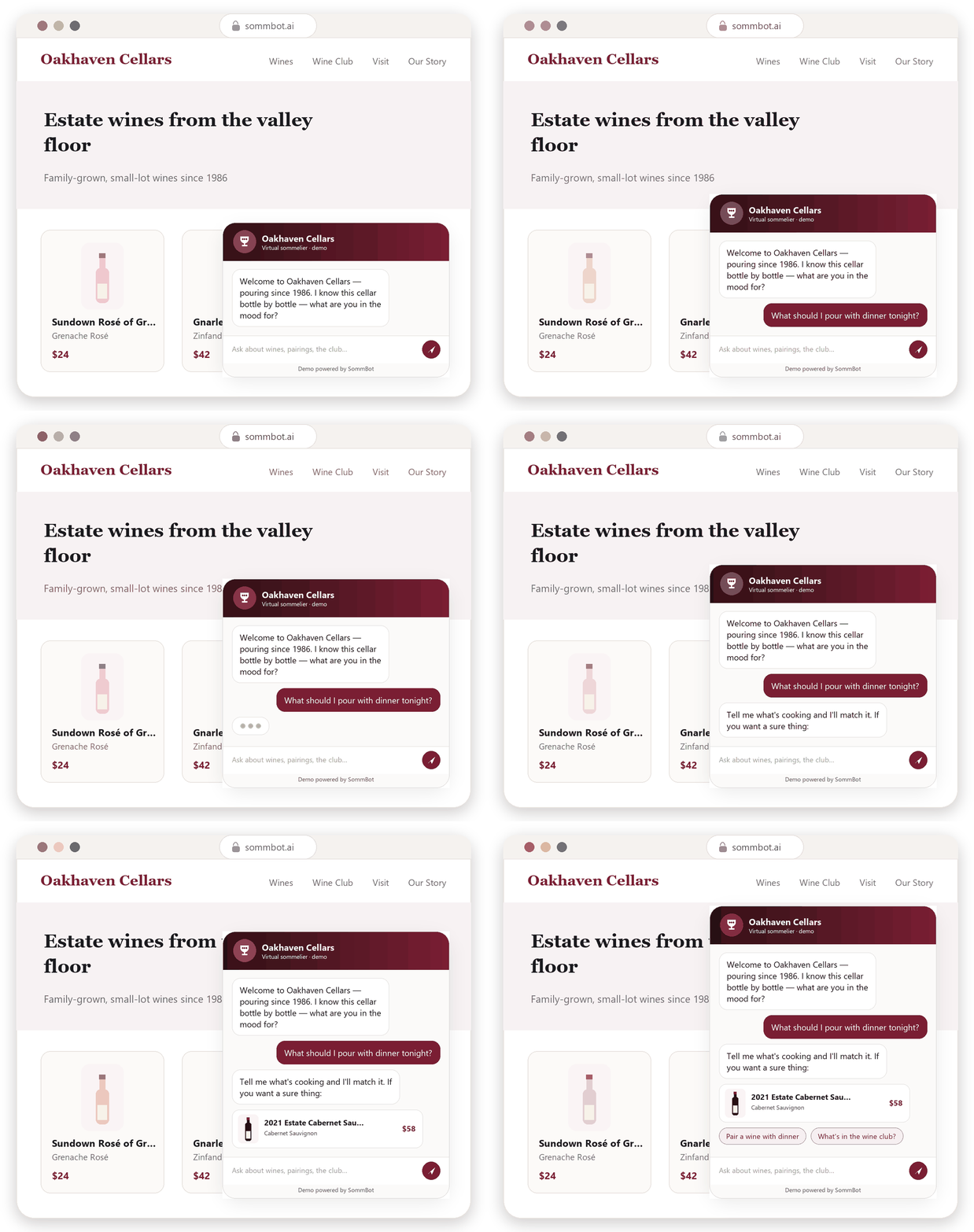
That means putting help exactly where the hesitation happens: on the product page and in the cart, not buried behind a policy link. When a shopper can ask "Do you ship to Texas?" or "Will this survive the July heat?" and get an instant, accurate answer, the objection dissolves before it becomes an exit. This is where a conversational assistant like SommBot earns its place — installed on your existing store, it knows your real catalog and current shipping rules, answers from approved content only, and hands off to a human when a question goes beyond what it should answer. It works at 11 p.m. and during a flash sale, exactly when your team can't.
Two in-session tactics matter most:
- Surface shipping reality early. Show whether you ship to the visitor's state, plus a rough shipping estimate, before the final checkout screen — not as a nasty surprise at the end.
- Answer at the point of doubt. Fit, breakage, timing, and club-pricing questions resolved in the cart convert far better than the same questions chased down by email an hour later.
Layer two: the abandoned cart recovery email sequence
Some shoppers will still leave, and for them a short, well-timed email sequence is the workhorse of abandoned cart recovery. The common mistake is sending three identical "You left something behind!" nudges. A better sequence assumes a reason and speaks to it.
A simple three-touch structure
- Touch one (within a few hours): a friendly, low-pressure reminder while intent is fresh. Show the actual bottles and pre-empt the top objection — reassure on safe, cold-packed shipping and an easy checkout. No discount yet.
- Touch two (next day): handle the specific hesitation. Address shipping cost or timing, restate the states you ship to, or answer "is this right for me?" with a tasting note or pairing. A link back into live chat can reopen the conversation here.
- Touch three (day two or three): add gentle urgency or, if it fits, a targeted incentive — low stock on that vintage, an approaching club cutoff, or free shipping over a threshold.
Chat and email work best as one system, each picking up where the other left off. We cover that handoff in depth in building an automated DTC nurture journey with email and chat.
Layer three: incentives that don't train shoppers to wait
Discounts are the reflex answer to abandonment, and the most overused one. If every abandoned cart triggers a 15%-off code, you teach your best customers to abandon on purpose. Beverage margins rarely have room for that habit, and it quietly cheapens a premium brand.
Use incentives with a lighter, smarter hand:
- Free shipping over a threshold beats a percentage off. Shipping is the number-one beverage objection, so removing it addresses the actual problem — and it nudges basket size up to clear the threshold instead of down.
- Reserve incentives for the carts that justify them. First-time buyers and high-value carts are worth an offer; a loyal club member who forgot a tab is not.
- Make the club the offer. Often the strongest incentive is reframing the purchase as membership — better per-bottle pricing and included shipping — which turns a one-time recovery into recurring revenue.
For a wider view of the levers around the cart, our field guide to ecommerce CRO for beverage brands puts incentives in context with the rest of the funnel.
Layer four: keep every recovery message compliant
Beverage is regulated, and cart recovery is one of the easiest places to slip. A recovery email that promises delivery to a state you can't ship to, implies a health benefit, or reaches someone who never age-verified is not just ineffective — it is a liability.
Keep the whole system safe with a few non-negotiables:
- Reflect real, current shipping and age rules in every message and every chat answer. Never promise a state you don't service or a date you can't hit.
- Skip health and wellness claims. "Antioxidant-rich" and "good for you" belong nowhere near a beverage recovery flow.
- Offer a legitimate alternative when an order is blocked — a gift to a serviceable address, local pickup, or a waitlist — instead of pushing an order that can't legally ship.
Automation makes this easier to get right, as long as the tools are built to refuse rather than guess. We go deeper on that discipline in compliance-safe AI for shipping, age-gating, and claims.
The bottom line on abandoned cart recovery
A layered approach isn't about hitting shoppers from four directions at once. It works because each layer catches a different kind of lost cart: chat saves the in-session doubt, email recovers the distracted shopper, incentives tip the price-sensitive one over the line, and compliance keeps all of it clean. Run them as one coordinated system and measure honestly — recovered revenue against messages sent — so you keep what works and cut what merely annoys.
Most of all, remember what a beverage cart usually is: not a rejection, but a question left hanging. Answer it well, at the right moment, and a surprising share of those carts come back. If you'd like to see a concierge that fields those questions on your own store, See a live demo and watch it handle the shipping, pairing, and club questions your shoppers are already asking.